
Join a community of professionals and get:
on all CeFPro events.
unlock speaker decks and audience polls.
Full library access the moment you sign up.
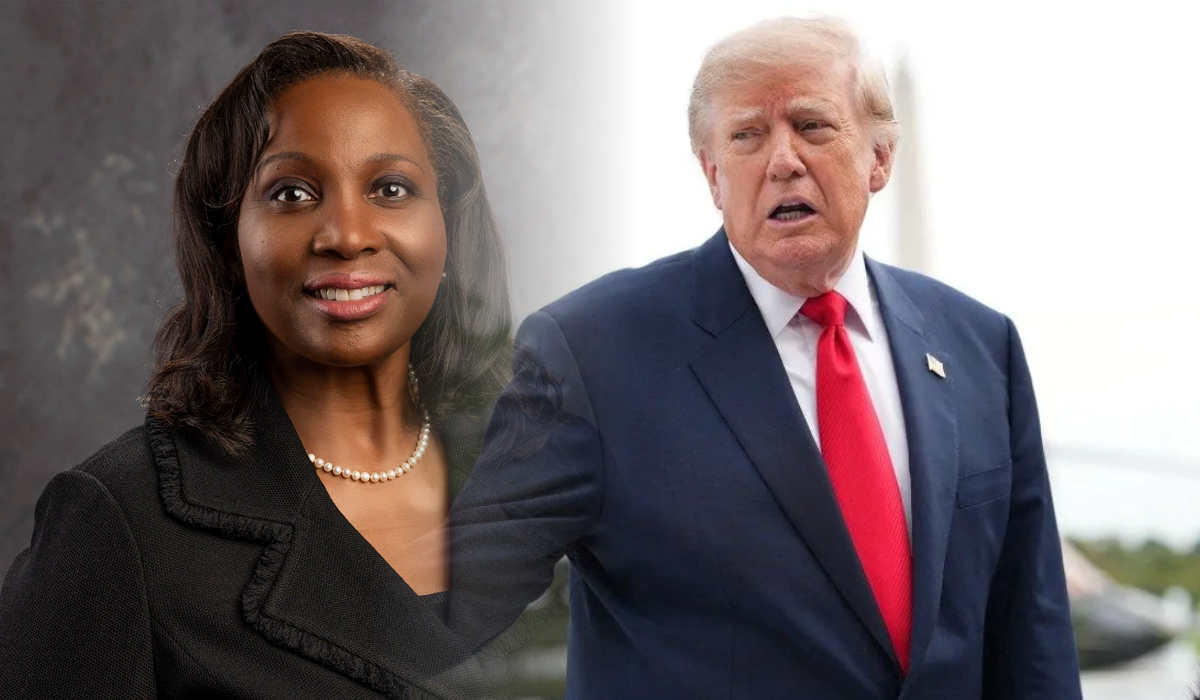
- Trump establishes
three-member committee investigating mortgage fraud allegations against
Fed Governor Lisa Cook
- Inquiry follows
Supreme Court ruling that Cook was denied due process
- Closed White House
hearing scheduled for November 5
- Committee comprises
three Trump administration nominees
- Cook's lawyers
question the legitimacy and independence of proceedings
- Democrats accuse
Trump of attempting to control the Federal Reserve
- Dispute follows
separate investigation into Fed headquarters renovation
- Case raises
significant questions about central bank independence and presidential
removal powers
President Donald Trump has
intensified his confrontation with the Federal Reserve by establishing a
three-member committee to investigate mortgage fraud allegations against
Governor Lisa Cook, renewing concerns about political interference in the
central bank's independence.
The White House announced Friday that
the committee will examine allegations that Cook made false statements in
mortgage applications, reviving a dispute that began in August 2025 when Trump
first attempted to remove her from office.
The latest development follows a
Supreme Court ruling in June that Cook had been denied due process during the
administration's earlier removal attempt.
In a 5-4 decision, the justices
determined that Cook must receive sufficient information about the allegations
and an opportunity to respond before a final removal decision can be made.
Chief Justice John Roberts emphasized
that any dismissal must follow an appropriate procedural framework, allowing
Cook to challenge the evidence before courts assess whether grounds for removal
exist.
The administration's latest approach
appears designed to address those procedural requirements.
As Dan Ennis, Banking Dive senior
editor, noted in a recent leader column, the committee resembles a historical
precedent cited by Roberts involving President William Howard Taft, who
established a similar inquiry in 1912 to examine the potential dismissal of
federal officials.
Trump defended the initiative as an
exercise of presidential responsibility.
"As President, it is my job to
ensure the laws are faithfully executed, including by firing subordinates who
cannot be trusted to tell the truth and follow the law," he said in a
memorandum released Friday.
Cook has been instructed to attend a
closed hearing at the White House on November 5. She may submit a written
statement at least three days beforehand and attend with legal representation.
A transcript will subsequently be published.
The committee comprises National
Economic Council Director Kevin Hassett, Labor Secretary and acting Office of
Government Ethics head Keith Sonderling, and Equal Employment Opportunity
Commission Chair Andrea Lucas. All three are Trump nominees.
Their appointments have prompted
questions about the independence of the proceedings.
Cook's attorneys, Abbe Lowell and
Norm Eisen, expressed serious reservations about whether the hearing could
satisfy legal standards.
They said they had "grave doubts
that this 'hearing' is a legitimate one that would conform to the law."
The dispute comes amid broader
tensions between the administration and Federal Reserve leadership.
A recent investigation by the Fed's
Office of Inspector General concluded that the central bank mismanaged a $2.5
billion headquarters renovation but identified no criminal violations.
Attorney General Todd Blanche
subsequently confirmed that the Justice Department would not reopen its
criminal investigation into former Fed Chair Jerome Powell concerning the
project.
Nevertheless, Trump has continued
pressing Powell to resign, while Hassett has publicly suggested the former
chair should leave the Fed board.
Democratic lawmakers have condemned
the Cook inquiry as another attempt to exert political control over monetary
policy.
Senator Elizabeth Warren
characterized the proceedings as an "illegitimate show trial," while
Senate Minority Leader Chuck Schumer accused Trump of attempting to seize
control of the central bank.
Cook's lawyers maintain that the
allegations do not justify her removal and have questioned whether the
administration has already predetermined the outcome.
They said an objective examination
would establish that Cook had not committed mortgage fraud and that no lawful
basis existed for dismissing her.
The Federal Reserve declined to
comment on the committee's establishment.
The confrontation raises wider
questions about the safeguards protecting central bank officials from
presidential dismissal and the extent to which allegations of misconduct can
justify removal.
With the November hearing
approaching, the dispute could become another significant test of Federal
Reserve independence, presidential authority and the legal protections afforded
to monetary policymakers.