
Join a community of professionals and get:
on all CeFPro events.
unlock speaker decks and audience polls.
Full library access the moment you sign up.
Video
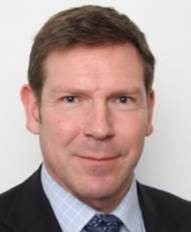
Mikko Venermo, Lead Financial Officer at the International Finance Corporation (IFC), delivers a comprehensive overview of how sustainability risk management is being reshaped by rising expectations around traceability and regulatory reporting. With three decades of experience in sustainable finance and E&S risk, he emphasizes how recent standards like ISSB and ESRS have pushed organizations to assess sustainability impacts across their full value chain—far beyond just immediate suppliers.
Venermo highlights the growing necessity of traceability in raw materials and products, both to meet investor expectations and to comply with fast-approaching disclosure mandates. Companies are being called to screen for risk not just by geography and industry, but by contextual signals—such as low prices or low labor costs—which may hint at deeper ethical concerns.
He explains that no single tool is enough to tackle sustainability risks effectively. A blend of due diligence, evaluation criteria, contract design, and continuous monitoring is essential. The convergence of top-down regulatory pressure from developed markets and bottom-up adoption in emerging economies is creating a feedback loop, making ESG data throughout the supply chain a business-critical asset.
Venermo also warns of persistent blind spots—namely, the growing number of ESG issues that remain under-examined. He argues that surface-level assessments won’t suffice in the face of complex, multifactorial risks. In particular, Scope 3 emissions reporting has shown both the difficulty and necessity of looking deeper into indirect impacts.