
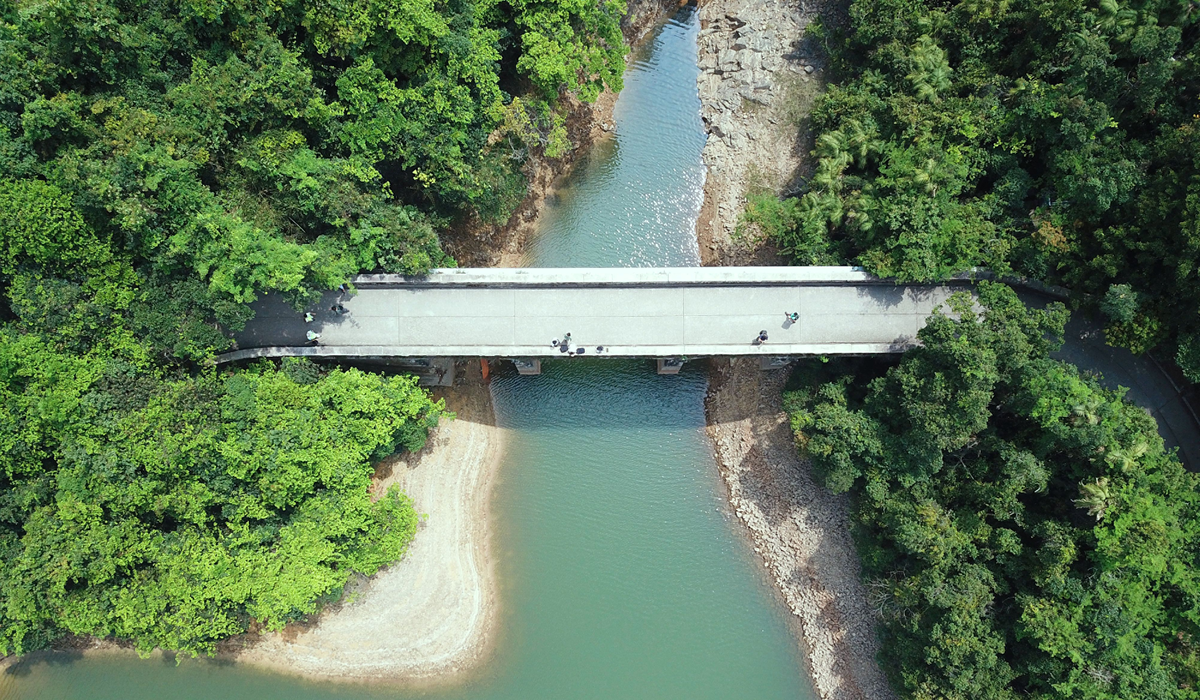
Bridging Climate and Nature Risk
- Climate and nature risks already overlap significantly in sectors such as agriculture, forestry, and real estate.
- Financial institutions can begin integrating nature considerations into existing climate risk frameworks through geospatial and water stress analysis.
- The biggest challenge for financial stability frameworks is developing methodologies that translate localized ecosystem degradation into systemic risk.
- Future risk frameworks will require integrated climate and nature scenarios, enhanced asset-location tracking, and supply chain exposure mapping.
- A broader planetary boundaries approach may eventually redefine how environmental risks are managed across the financial sector.
As climate and nature risks become increasingly interconnected, financial institutions face growing pressure to understand how ecosystem degradation, biodiversity loss, and climate impacts can influence financial stability. Ahead of Climate Risk Europe, we spoke with Stéphane Dees from the Banque de France to discuss practical approaches to integrating nature risk into existing frameworks, the challenges facing regulators and institutions, and what the future of environmental risk management may look like.
1.
Where do you see the biggest practical overlap between climate and nature risk
today? Are there areas where financial institutions could already be managing
the two together rather than developing separate frameworks?
The most immediate practical overlap lies in
land-use sectors such as agriculture, forestry, and real estate, where climate
adaptation and ecosystem health are directly intertwined. Financial
institutions can already begin managing climate and nature risks together by
incorporating indicators such as water stress into existing physical risk
screening models for climate-related hazards, including droughts and floods.
2. Climate risk has had a significant head start in terms of data, scenarios and regulatory expectations. How should institutions approach nature risk while accepting that its data and methodologies are still considerably less mature, without simply applying the climate framework by analogy?
Rather than forcing nature risk into a
single carbon-equivalent metric, institutions should adopt a spatial and
location-specific approach that focuses on dependencies and impacts. A
practical starting point is the use of sector heatmaps and geospatial tools
such as ENCORE to identify localized vulnerability hotspots before attempting
more sophisticated financial valuation methodologies.
3. From a central-bank and financial-stability perspective, what is currently the biggest obstacle to integrating nature risk into existing financial risk frameworks? Is it primarily a data problem, a methodological problem, or a question of governance and risk appetite?
The primary challenge is methodological,
particularly in relation to macro-financial transmission modelling.
Nature-related risks are highly localized, non-linear, and often characterised
by extreme tail risks. As a result, translating ecosystem degradation into
broader economic shocks and financial stability indicators remains a
significant challenge for regulators and central banks.
4. Looking five years ahead, what would a genuinely integrated climate-and-nature risk framework look like? What capabilities or metrics do you think financial institutions need to start building now?
A genuinely integrated framework would
combine climate transition pathways with ecosystem service degradation and
double materiality considerations within a single macro-financial scenario
framework. To prepare for this future, institutions should invest in
capabilities such as geospatial asset-location tracking, supply chain exposure
mapping, and TNFD-aligned risk reporting. Central banks and supervisory bodies,
including the Network for Greening the Financial System (NGFS), are already
exploring how nature-related risks can be integrated into scenario analysis.
5. Do you expect the relationship between climate and nature risk to become increasingly difficult to separate as transition, physical and ecosystem risks interact? And could that ultimately require us to rethink how financial institutions define and manage environmental risk altogether?
The interaction between climate and nature
risks is likely to become increasingly complex as compounding physical feedback
loops intensify. For example, deforestation can increase regional climate
extremes, creating cascading effects across ecosystems and economies. As these
interdependencies grow, isolated risk models will become less effective.
Financial institutions may ultimately need to adopt a broader planetary
boundaries framework that treats climate, biodiversity, and nature as
interconnected drivers of long-term economic and financial resilience.
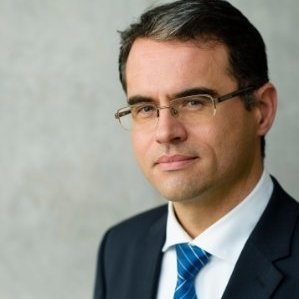
Head of Climate Economics Unit, Banque De France
Stéphane Dees joined the Banque de France in 2017. He is currently Head of the Climate Economics Unit in the Directorate General Statistics, Economics and International and an active member of the Network for Greening the Financial System (NGFS). Before he was a scientific advisor in the Directorate Macroeconomic Analysis and Forecasting and in the Directorate Financial Stability. Before joining the Banque de France, Stéphane was an Advisor at the European Central Bank where he held several positions in the Directorate General Economics and the Directorate General Macroprudential Policy and Financial Stability. He also worked for the National Institute of Economic and Social Research (NIESR) in the U.K. and for CEPII, a French center for research and expertise on the world economy. Stéphane is also an Associate Professor at the University of Bordeaux, in the areas of macroeconomics, finance and international economics. His academic research is mainly about financial and international macroeconomics, financial stability, stress testing and climate change. His work has been published in international journals, such as Journal of International Economics, Journal of Money, Credit, and Banking, Journal of Financial Stability or Journal of Applied Econometrics. He also contributed to several books on globalization, business cycles synchronization and on macroprudential stress testing. Mr. Dees earned his M.A. and Ph.D. degrees in Economics at the University of Bordeaux.
LinkedIn profile




