
Skip to content

Content Library

Back to Articles

Article April 8, 2025

The Evolving Treasury Landscape – Where Challenge Meets Opportunity
The Evolving Treasury Landscape – Where Challenge Meets Opportunity

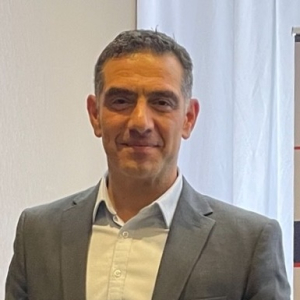
Andreas Simou, Managing Director, Center for Financial Professionals

CeFPro’s recent Treasury ALM USA conference revealed the unparalleled complexities facing treasury and risk professionals, driven by the Trump administration's fiscal policies, geopolitical tensions, and evolving regulations. Key discussions highlighted t
  • Treasury and risk professionals face unprecedented complexities due to current fiscal policies and geopolitical tensions.
  • Institutions are adopting real-time stochastic scenario analyses to navigate economic uncertainties.
  • The Federal Reserve's slowed quantitative tightening and repo market volatility signal potential liquidity stresses.
  • Transition from LIBOR to SOFR shifts risk onto bank balance sheets, necessitating robust risk management strategies.
  • High-Quality Liquid Asset (HQLA) requirements have elevated collateral optimization to a critical, resource-intensive function.
  • AI and machine learning are essential for advanced behavioral modeling and real-time risk assessment.
  • Blockchain technology is revolutionizing collateral management through tokenized assets and real-time settlements.
  • Liquidity is now viewed as a strategic asset, with intraday visibility becoming crucial for competitive advantage.
  • Regulatory scrutiny is intensifying, demanding more sophisticated interest rate risk models and detailed deposit analytics.
  • Legacy systems pose challenges; modern technological infrastructures are vital to meet real-time demands in ALM.

display-middle-ads-here

This year’s CeFPro Treasury ALM USA conference in America reaffirmed a simple truth that treasury and risk professionals have long known: today’s financial environment is more complex than at any other time in history.  


From macroeconomic uncertainty that is inevitably tied to the fiscal policies of the Trump administration and the challenging headwinds of geopolitics to evolving regulatory demands, the landscape is shifting rapidly, demanding a new playbook for treasury and asset-liability management (ALM).  


Here are just some of the key takeaways from what was a vibrant and fascinating conference that captured ALM at a moment in time that 


Walking the Macro Tightrope 


The economic outlook remains uncertain, with financial institutions preparing for multiple scenarios. Recession fears persist as cracks emerge in labor markets, but concerns over stagflation—exacerbated by tariffs and geopolitical tensions – complicate traditional responses.  


To stay ahead, industry leaders are no longer waiting for quarterly risk assessments; instead, they are running stochastic scenario analyses on a regular basis to adjust their strategies in real time. 


The Federal Reserve’s decision to slow quantitative tightening (QT) to $20 billion per month appears to be a delicate balancing act rather than a definitive policy shift.  


Meanwhile, the repo market is becoming an early warning system for liquidity stress. When so-called ‘risk-free’ collateral begins to exhibit volatility, institutions need to take notice. 


The Collateral Conundrum 


The transition from LIBOR to SOFR has fundamentally altered the risk landscape. Unlike LIBOR, SOFR lacks a built-in credit component, shifting more risk onto bank balance sheets. The 2020 liquidity crisis demonstrated just how quickly this shift can impact financial stability. 


Additionally, High-Quality Liquid Asset (HQLA) requirements are now central to strategic decision-making.  


One eye-opening revelation from the conference: some firms’ collateral optimization teams have become their most expensive middle-office function. Managing liquidity and collateral efficiently is no longer a back-office concern – it’s now a critical competitive advantage. 


The Future and Technology 


Technology is transforming ALM at an unprecedented pace. Artificial intelligence (AI) and machine learning (ML) are no longer just industry buzzwords – they have become essential components of risk management.  


Behavioral modeling is a prime example. Static deposit assumptions alone are no longer enough, and institutions relying on outdated models risk paying the price of severe blind spots in their liquidity planning. 


Blockchain is quietly revolutionizing collateral management. Tokenized assets and real-time settlement capabilities are reducing liquidity friction, making settlement times a matter of minutes rather than days -real time risk management, even for the largest banks and most complex assets, is a likely scenario in the near future.  


While adoption remains gradual, firms that embrace blockchain-driven efficiencies will have a significant advantage in managing liquidity risk. 


A New Book for Risk Professionals? 


The conference highlighted several fundamental shifts that financial institutions must embrace, such as: 


  1. Liquidity as a strategic asset – no longer just a buffer, intraday liquidity visibility is now a non-negotiable advantage 

Events you may be interested in

View all of our upcoming events

Sign Up to Our Newsletter

Sign up

Connect Plus

Unlock more with Connect Plus membership

This content is available to Connect Plus members.





