
Skip to content

Content Library

Back to Articles

Article August 9, 2025

Why Even the Greatest Risk Dashboard Can't Save Your Reputation
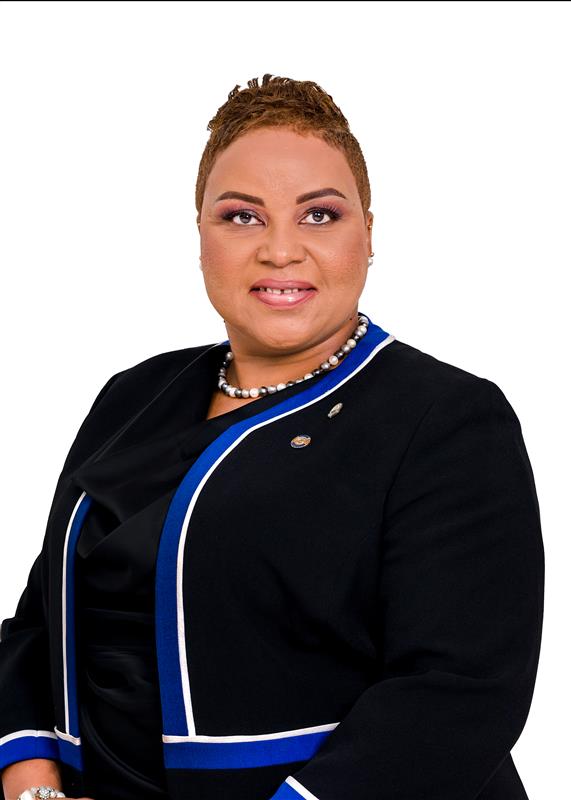
Why Even the Greatest Risk Dashboard Can't Save Your Reputation

Jennifer K. Marshall-Robertson, Executive Manager Risk (Chief Risk Officer), Grenada Co-operative Bank LtdLinkedIn profile for Jennifer K. Marshall-Robertson

In a world dominated by social media and AI, reputational risk is escalating. A Caribbean risk leader argues that robust governance, employee training, and clear crisis protocols are now essential to protect institutional trust and brand equity.
  • A Caribbean risk leader warned that reputation risk is accelerating in the digital age
  • Social media enables reputational damage in seconds, often from internal sources
  • Even internationally based Banks are globally exposed through regulatory alignment.
  • Younger employees and casual online culture add new operational risks
  • Institutions need clear communication policies and regular social media training
  • Reputational risk must be integrated across all enterprise risk assessments
  • Dashboards alone are not enough without intelligent human interpretation
  • Silence during a reputational event is often viewed as guilt
  • Crisis communication playbooks are essential, not optional
  • Strong governance and leadership remain key to protecting brand trust

For the first time, a billion-dollar bank in the Caribbean stole the spotlight at this year’s global risk conference. 

In a sharp, unscripted address at CeFPro’s 2025 Risk Americas event, one risk veteran challenged the room to stop treating reputational risk like PR fallout and start recognising it as a core strategic threat. 

And her message was simple – in a world ruled by AI, the human factor is still what will break you.

This seasoned risk leader from Grenada captivated the audience with a compelling reflection on the evolving nature of reputational risk. 

Drawing on three decades of banking experience and a career built on innovation and transformation, she delivered the clear and timely message that in an era dominated by automation and artificial intelligence, the fundamentals of risk management matter more than ever.

As a risk leader of a D- SIB Bank, she emphasized how global interconnectedness, such as her region’s   peg to the US dollar and adherence to Basel-driven regulatory standards, places even  Banks in her region   within the reach of international reputational exposures. 

Despite the scale of the institution, the risks are universal. The tools may be modern, but the threats are increasingly rooted in basic human behavior – unpredictable, emotional, and instantaneous.

She highlighted how social media has radically altered the dynamics of customer and employee engagement. 

Where once complaints were penned in formal letters or delivered through physical protests, today's reputational damage can erupt in seconds through a single post. 

Managing this risk requires more than digital tools; it demands renewed investment in governance, policy, and education. At the center of this new reality lies the human element, often the most volatile and overlooked component of organizational risk.

The shift in workplace demographics, particularly the influx of younger employees with a normalized relationship to social media, adds layers of complexity. 

The speaker pointed to incidents where casual posts, selfies, or even live-streamed HR meetings exposed institutions to unintended operational risks. 

These examples served not just as cautionary tales, but as evidence of a larger need for disciplined onboarding, clearly defined internal communication policies, and regular training tailored to today’s media landscape.

Beyond operational oversight, she emphasized the strategic importance of the brand. In a digital world where trust is currency, reputational risk must be considered as an outcome of nearly every activity across the enterprise. She encouraged institutions to rethink their frameworks, embedding reputational risk analysis into all risk and control self-assessments, rather than treating it as a standalone category.

Rather than relying solely on data dashboards or outsourced service providers, she advocated for intelligent human oversight. 

Understanding customer sentiment and interpreting emerging trends require more than metrics; they require contextual awareness and prudent judgment. 

Events you may be interested in

View all of our upcoming events

Sign Up to Our Newsletter

Sign up

Connect Plus

Unlock more with Connect Plus membership

This content is available to Connect Plus members.





