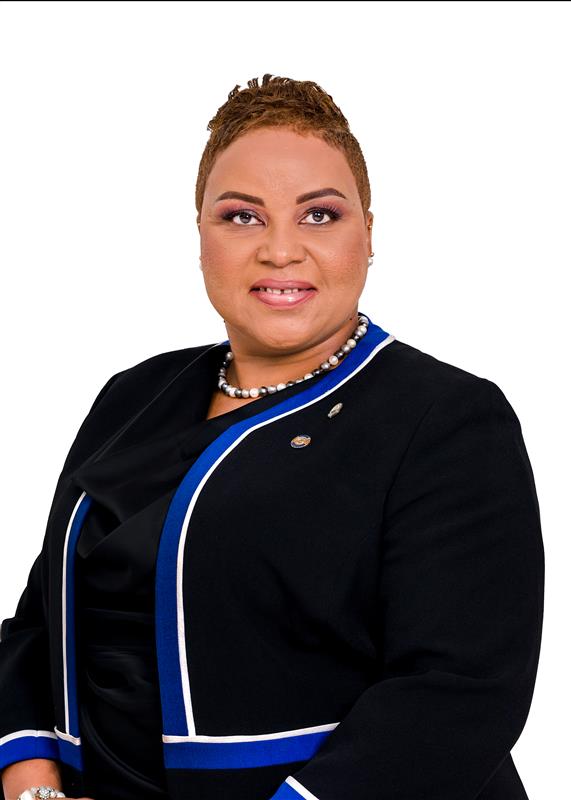
Jennifer Marshall-Robertson of Grenada Co-operative Bank warns that accountability in banking must extend beyond policy documents into leadership behavior, culture and technology governance as financial institutions confront growing conduct risks tied to
A senior risk manager has warned that
accountability within financial institutions cannot survive as a theoretical
exercise confined to policies and governance documents.
Speaking ahead of an accountability
and culture session at this week’s Risk Americas conference, Jennifer
Marshall-Robertson, Executive Manager, Risk at Grenada Co-operative Bank argued
it must be visible in daily behaviors, leadership conduct and the consistent
enforcement of ethical standards across every layer of an organization.
Marshall-Robertson described
accountability as being rooted in “ownership, answerability and consequences,”
adding that the ultimate objective is to create trust-based relationships
between stakeholders while supporting ethical judgment and transparent decision
making.
She stressed that accountability
frameworks only become effective when translated into practical actions and
communication practices that employees experience in their daily roles.
“Accountability begins with the Board
of any business or organization - as the tone is always set from the top,” she
said, explaining that governance structures must cascade throughout the
organization rather than remain isolated within senior leadership.
Her comments come as banks globally
continue to face scrutiny over conduct failures, governance weaknesses and the
operational risks associated with rapid technological transformation.
Increasingly, regulators are focusing
not simply on whether policies exist, but whether institutions can demonstrate
a genuinely embedded culture of accountability and ethical behavior.
Marshall-Robertson argued that
organizations must establish clear strategies, risk appetite frameworks and
transparent communication practices while ensuring there is a strong
distinction between decision-making authority and oversight responsibilities.
She also highlighted the importance
of continuous monitoring, ethics frameworks and transparent escalation
procedures.
The challenge becomes even more acute
during periods of commercial or operational pressure, when leaders may face
incentives to prioritize results over conduct standards.
Marshall-Robertson said organizations
must ensure executives “walk the walk” rather than merely “talk the talk,”
particularly when decisions carry significant financial or reputational
consequences.
“This is a question of culture,” she
said. “How do you embed and enforce the desired culture of integrity, ethics
and accountability?”
She advocated for consistent HR and
ethics policies that apply equally to senior management and junior staff,
warning that any perception of unequal treatment can rapidly erode trust across
the organization.
Performance evaluations and incentive
structures, she argued, should assess not only financial outcomes but also the
manner in which those outcomes are achieved.
Marshall-Robertson also emphasized
the importance of “speak up” cultures supported by non-retaliation protections
and anonymous feedback channels.
These mechanisms, she said, are
essential in helping organizations identify emerging risks before they escalate
into broader governance failures.
Beyond governance, she warned that
banks face growing conduct risks tied to technology transformation, artificial
intelligence and evolving workforce models.